
Dive Adventurer
-
Welcome to the Dive Adventurer Course!
-
Altitude Adventure Dive
Introduction to the Altitude Adventure Dive -
Planning Altitude Dives
-
How Altitude Affects Divers
-
Altitude Adventure Dive Knowledge Check1 Quiz
-
Altitude Adventure Dive
-
Boat Adventure DiveIntroduction to the Boat Adventure Dive
-
Boats, Terms, and Types
-
Rules of the Road and Boating Awareness
-
Boat Adventure Dive Knowledge Check1 Quiz
-
Boat Adventure Dive
-
Buoyancy Adventure DiveIntroduction to the Buoyancy Adventure Dive
-
Achieving Neutral Buoyancy – The Art of Underwater Weightlessness
-
Advanced Buoyancy Skills – Level Up Your Diving
-
Buoyancy Adventure Dive Knowledge Check1 Quiz
-
Buoyancy Adventure Dive
-
Deep Adventure DiveIntroduction to the Deep Adventure Dive
-
Preparing for Deep Diving
-
Deep Dive Planning
-
Deep Adventure Dive Knowledge Check1 Quiz
-
Deep Adventure Dive
-
DPV Adventure DiveIntroduction to the Dive Propulsion Vehicles (DPV) Adventure Dive
-
DPV Safety and Emergency Management
-
DPV Adventure Dive Knowledge Check1 Quiz
-
DPV Adventure Dive
-
Drift Adventure DiveIntroduction to the Drift Adventure Dive
-
Safety Procedures for Drift Diving
-
Drift Diving Techniques
-
Drift Adventure Dive Knowledge Check1 Quiz
-
Drift Adventure Dive
-
Dry Suit Adventure DiveIntroduction to the Dry Suit Adventure Dive
-
Diving in a Dry Suit
-
Dry Suit Safety and Emergency Procedures
-
Dry Suit Adventure Dive Knowledge Check1 Quiz
-
Dry Suit Diver Confined Water Session
-
Dry Suit Adventure Dive
-
Marine Ecology DIveIntroduction to the Marine Ecology Adventure Dive
-
Organism Groupings and Functional Roles
-
Relationships, Interactions, and Behaviour
-
Marine Ecology Adventure Dive Knowledge Check1 Quiz
-
Marine Ecology Adventure Dive
-
Multimedia Adventure DiveIntroduction to the Multimedia Adventure Dive
-
GoPro Basics
-
Caring for the Environment, Yourself and Your Gear
-
Multimedia Adventure Dive Knowledge Check1 Quiz
-
Multimedia Adventure Dive
-
Navigation Adventure DiveIntroduction to the Navigation Adventure Dive
-
Basics of Underwater Navigation
-
Advanced Compass Techniques
-
Navigation Adventure Dive Knowledge Check1 Quiz
-
Navigation Adventure Dive
-
Night Adventure DiveIntroduction to the Night Adventure Dive
-
Preparing for Night Diving
-
Night Diving Techniques
-
Night Adventure Dive Knowledge Check1 Quiz
-
Night Adventure Dive
-
Nitrox Adventure DiveIntroduction to the Nitrox Adventure Dive
-
Nitrox Diving Fundamentals
-
Considerations for Nitrox Diving
-
Nitrox Adventure Dive Knowledge Check1 Quiz
-
Nitrox Adventure Dive
-
Search and Recovery Adventure DiveIntroduction to the Search and Recovery Adventure Dive
-
Planning and Executing Search Patterns
-
Using Specialised Equipment
-
Search and Recovery Adventure Dive Knowledge Check1 Quiz
-
Search and Recovery Adventure Dive
-
SMB Adventure DiveIntroduction to the SMB Adventure Dive
-
Gearing Up for Success: SMB Equipment and Assembly
-
Underwater SMB Deployment
-
SMB Adventure Dive Knowledge Check1 Quiz
-
SMB Adventure Dive
-
Wreck Adventure DiveIntroduction to the Wreck Adventure Dive
-
Emergency Prevention and Procedures for Wreck Diving
-
Planning and Preparation
-
Wreck Adventure Dive Knowledge Check1 Quiz
-
Wreck Adventure Dive
DPV Safety and Emergency Management
DPV Safety and Emergency Management
By the end of this lesson, you will be able to:
- Explain DPV safety considerations
- Describe emergency procedures
- Explain self-rescue skills
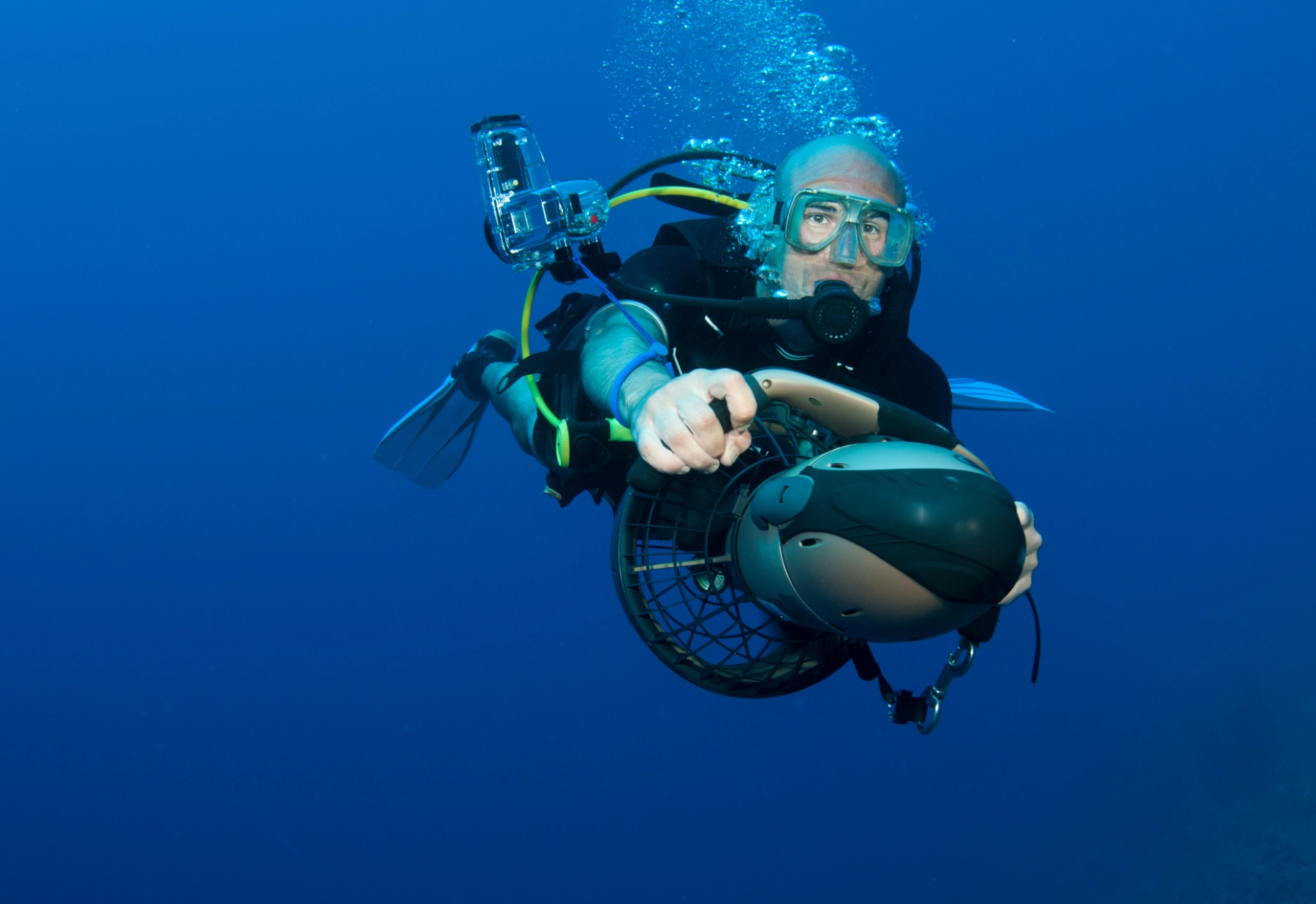
Safety Features
Automatic Shutoff Mechanisms
Most DPVs have automatic shutoff mechanisms that activate if the diver accidentally releases the controls. This feature is crucial to prevent the DPV from running away and potentially causing harm.
Divers should familiarize themselves with the shutoff system of their specific DPV model, understanding how it activates and how to reset it if necessary.
Depth and Battery Indicators
Advanced DPVs often have depth and battery life indicators. These tools are essential for divers to manage their dives within safe limits, especially regarding battery life, to ensure they can return safely without running out of power.
It’s important for divers to understand how to read these indicators accurately and to know the specific DPV’s maximum depth rating to avoid diving beyond its operational limits.
DPV Safety Considerations
Understanding and Training
Proper training is paramount for using a DPV safely. Divers should undergo a specialized training course that covers the operation, maintenance, and emergency procedures associated with DPVs. This training ensures that divers are familiar with the specific model they will use and understand how to handle it under various conditions.
Pre Dive Checks
Conducting thorough pre-dive checks is essential. Divers should inspect the DPV for any signs of wear or damage, ensure the battery is fully charged, and check that all controls and safety features function correctly. These checks help in identifying potential issues that could lead to malfunctions underwater.
Buoyancy and Trim
Maintaining proper buoyancy and trim is crucial when using a DPV. Divers should adjust their buoyancy to remain neutral, ensuring that the DPV does not cause them to ascend or descend unintentionally. Proper trim helps maintain balance and control while using the DPV.
Situational Awareness
Divers must maintain situational awareness at all times. This includes being aware of their surroundings, monitoring their depth and dive time, and keeping track of their air supply. It’s also important to be aware of other divers in the group to avoid collisions and separation.
Emergency Procedures
Familiarity with emergency procedures is essential. Divers should know how to respond if the DPV malfunctions, if they become separated from their group, or if they encounter other problems such as entanglement. Basic procedures include knowing how to ditch the DPV if necessary and how to signal for assistance.
Respect for Local Regulations
Adhering to local diving regulations and guidelines is important. This includes understanding any restrictions on the use of DPVs in certain areas and abiding by the rules set by local authorities or dive sites.
Buddy System and Group Safety
When using DPVs, the buddy system becomes even more crucial. Divers should always stay within a safe distance of their buddy or group and have pre-determined signals for communication while using DPVs.
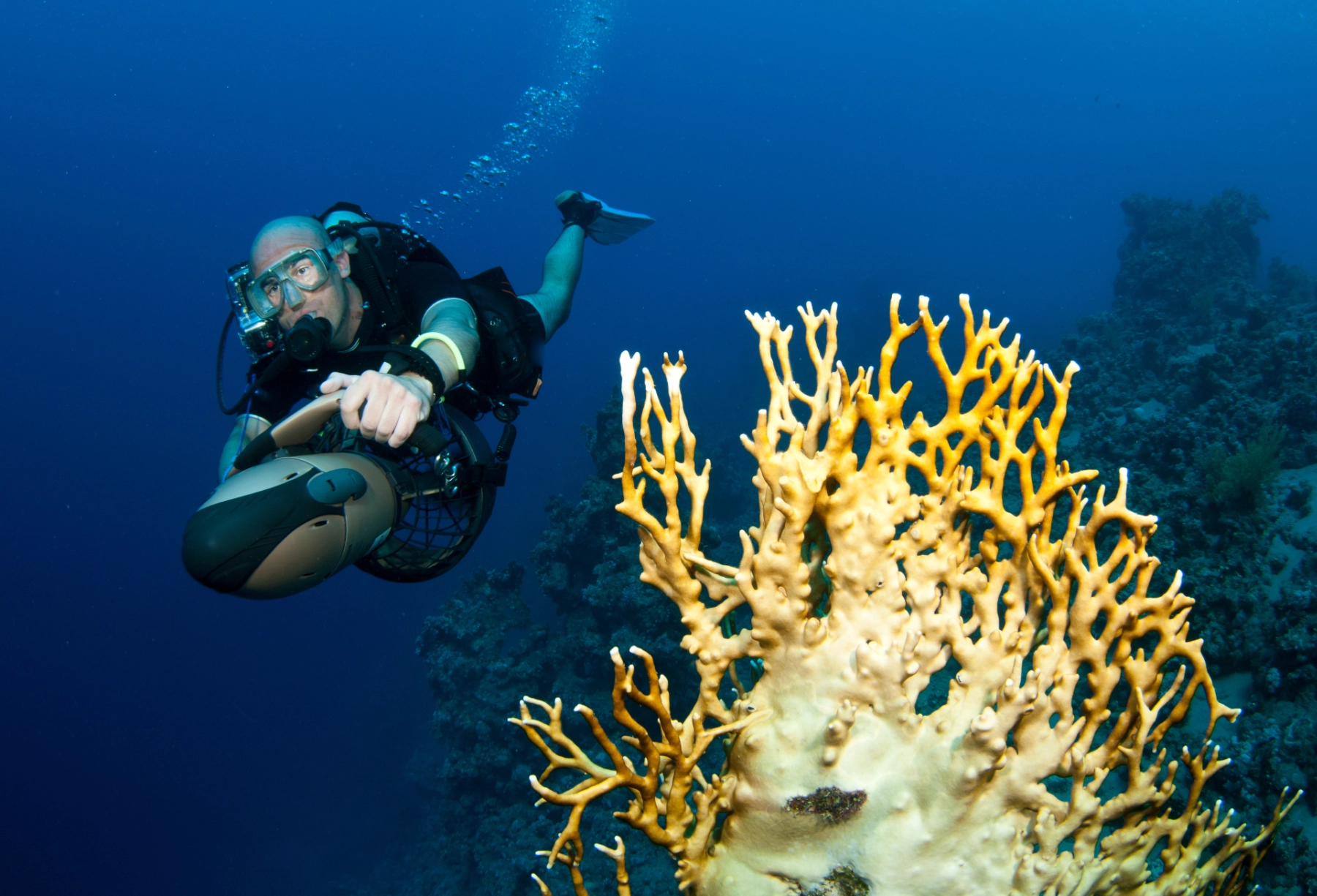
Emergency Procedures
In DPV diving, emergencies can arise from various scenarios, including entanglements and equipment failure.
Entanglement Management
Entanglements can occur with underwater flora, debris, or fishing lines. In such scenarios, the first step is to remain calm. Use hand signals to communicate the issue to your buddy. Gently attempt to untangle yourself or use a dive knife as a last resort. It’s essential to avoid rapid movements, which could worsen the entanglement.
Equipment Failure
If your DPV fails, assess whether it can be restarted or fixed underwater. If not, switch to traditional finning techniques. It’s crucial to have a pre-dive plan for such situations, including a designated meeting point or a specific surface protocol.
Self-Rescue Techniques
Sometimes, divers may become isolated from their group or face equipment malfunctions.
Dealing with Isolation
If separated, use your DPV to navigate to the pre-agreed meeting point. If you can’t find your group, ascend to the surface following safe ascent practices. Always carry a surface signalling device for such situations.
Handling Equipment Malfunction
In case of a DPV malfunction, switch to manual swimming. Conserve energy and air by swimming slowly and steadily. If you’re carrying an extra propulsion device, like a scooter, use it to return.
Buddy Rescue Skills
Assisting a distressed dive buddy is a vital skill in DPV diving.
Recognising Distress
Be alert to your buddy’s condition. Signs of distress include erratic movements, frantic signalling, or struggling with equipment.
Approaching and Assisting
Be alert to your buddy’s condition. Signs of distress include erratic movements, frantic signalling, or struggling with equipment.
Ascent and Surface Support
If an emergency ascent is needed, assist your buddy in a controlled ascent, maintaining close contact and monitoring their condition. Once at the surface, provide flotation support and signal for help if necessary.